
It usually arrives around 4pm. The light changes, someone mentions the week ahead, and your stomach does a small, familiar flip. By 9pm you're mentally triaging Monday's list, rehearsing a conversation with a client, or checking the rota for the third time.
If that's you, you're in very good company. The Sunday Scaries are incredibly common in vetmed, and they say nothing about whether you're good at your job. Often they say the opposite: you care, a lot.
Why Sunday does this
Your brain is brilliant at anticipating threat. That's part of what makes you good at your work. You spot the dog that's quieter than it should be, the owner who's about to cry, the drug interaction nobody else noticed.
The problem is that the same system doesn't clock off. On a Sunday evening it starts scanning ahead: the full list, the difficult case, the colleague who's off sick. Your body responds as if Monday is already happening. Racing thoughts, a tight chest, a short fuse with the people you love. None of that means something is wrong with you. It's a nervous system doing its job a bit too enthusiastically.
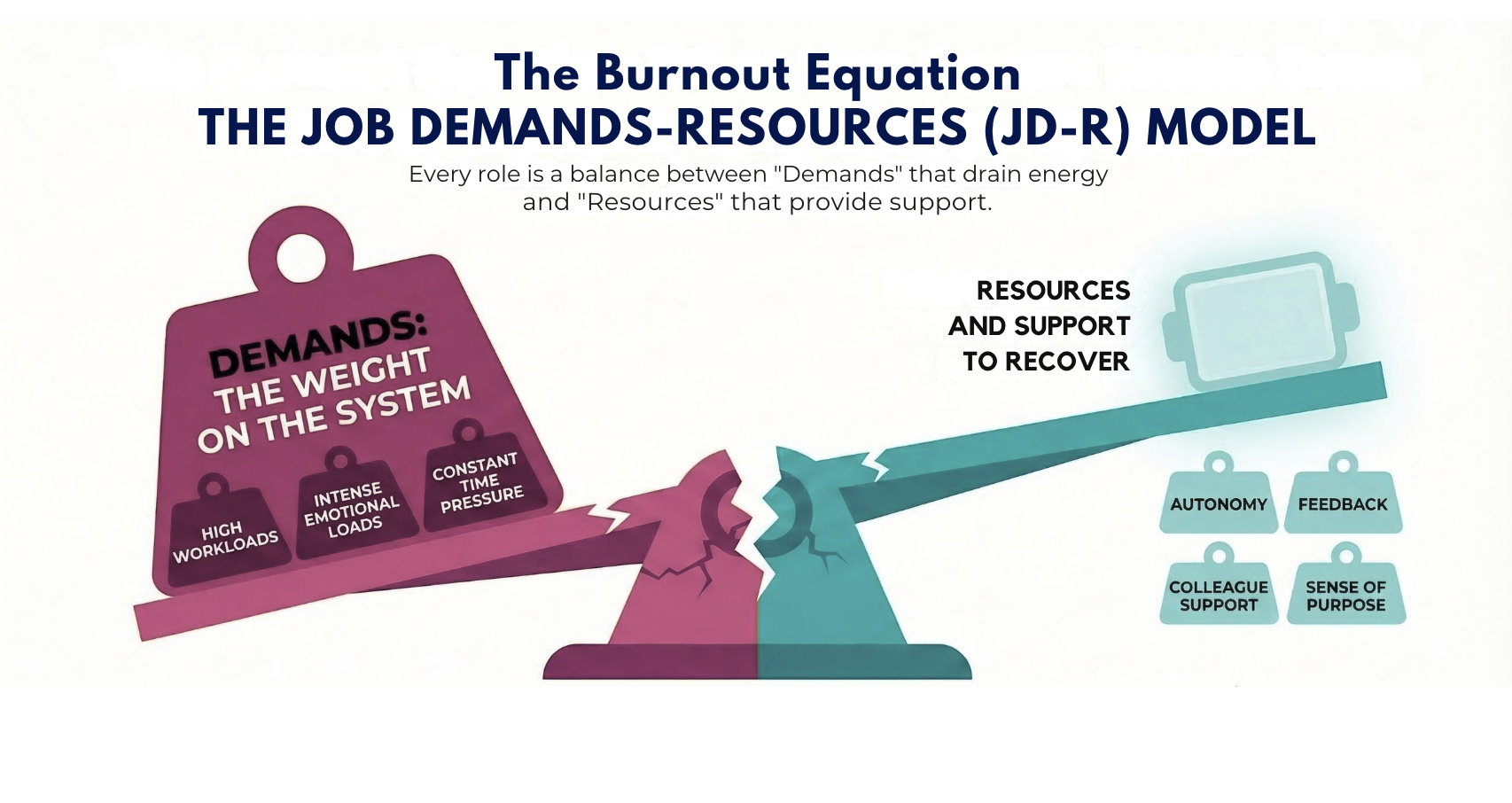
And it's not only you. A week with too many patients, too few people and no lunch break would make anyone's Sunday feel heavy. Some of this is about the system, not your mindset.
What actually helps
Give Monday a place to live that isn't your head. Spend ten minutes on Friday afternoon writing down what's waiting for you. Not to solve it, just to park it. Your brain lets go more easily when it trusts something is written down.
Notice what's yours to carry. Some of Monday's worries are genuinely yours. Others belong to the rota, the practice or the client. Sorting them, even roughly, takes some of the weight off.
Plan one small good thing for Monday. A proper coffee, a walk at lunch, ten minutes with a colleague you like. It sounds small. It's meant to. Your brain needs something to look forward to as well as something to brace for.
Come back to your body. When your mind is sprinting, slow, longer out-breaths are one of the quickest ways to signal safety to your nervous system. If you'd like help with this, we have a free tool that so many people tell us they use on Sunday nights. It's a simple way to pause, settle and respond rather than react, and you can get it free here.
Protect a bit of Sunday. If Sunday evening has become admin time, see if one hour can be yours again. Not productive. Yours.
When it's more than a Sunday thing
If the dread is spreading through the whole week, or Monday mornings feel impossible, please take that seriously. Talk to someone you trust, your GP, or Vetlife, who are there 24/7 on 0303 040 2551. Feeling like this isn't a weakness, and you deserve support with it.
If you'd like a bit more
We put everything we know about calmer Sundays into The Sunday Switch Off. It's a kind, practical guide with printable worksheets and two guided meditations from Claire. It's £7 + VAT, comes with a CPD certificate, and it's designed to be picked up on a Sunday afternoon with a brew. If Sunday nights have been getting harder, it's a lovely place to start.